Every year in the Gulf comes with a list of buildings that are said to be finishing. Most of that list moves. A smaller list actually opens its doors, and those are the ones worth planning a visit around, because a building you have walked through teaches you more than a hundred renders.
Saadiyat, the cluster that finally reads as a district
Abu Dhabi’s cultural district was drawn as a set of single buildings by single names. It is only now, with several of them complete or close, that it starts to behave like a district: one walk, several buildings, shared ground.
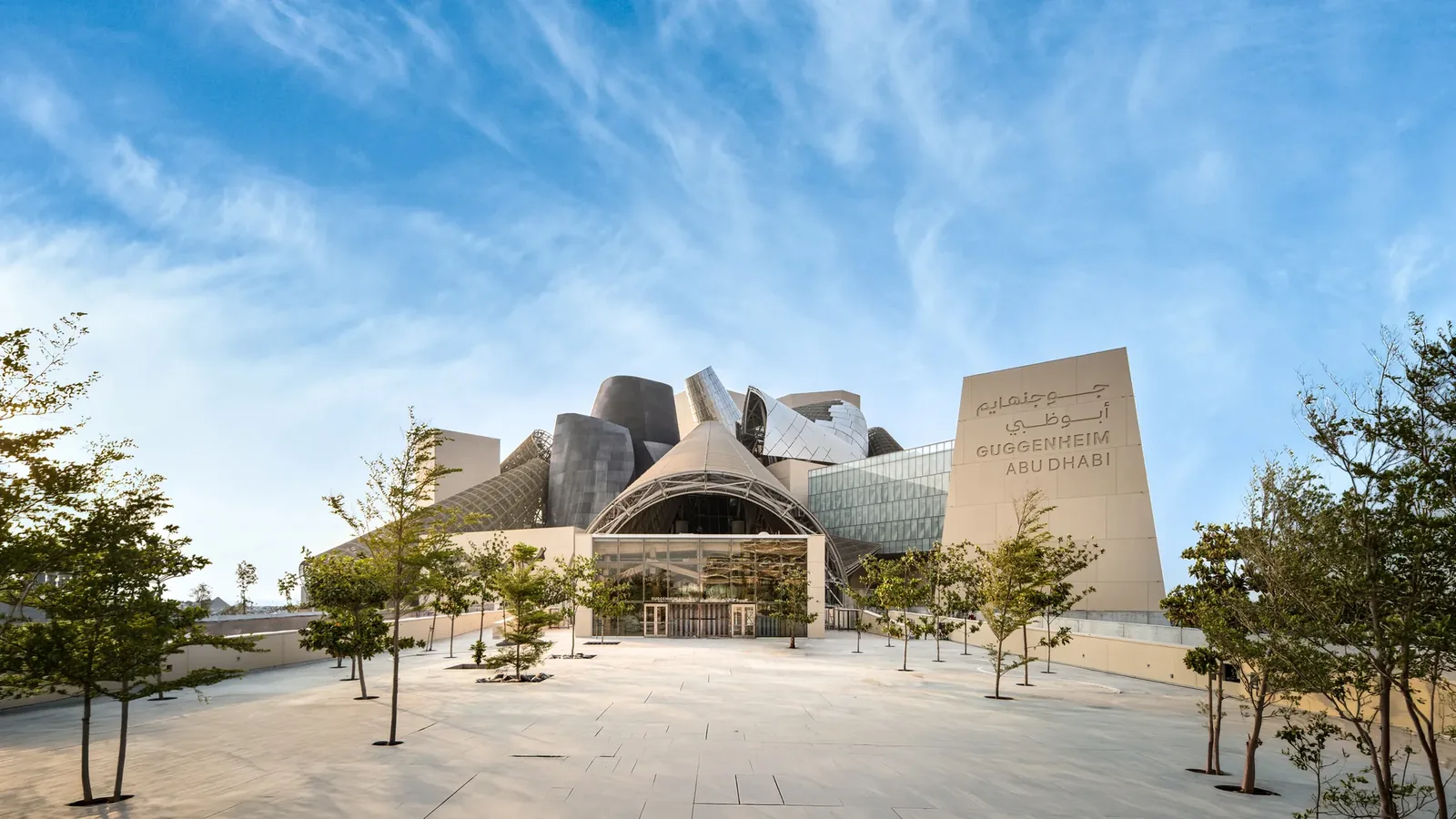
Guggenheim Abu Dhabi, designed by Frank Gehry, is the piece the region has waited longest for. It is much larger than the Bilbao building that made the model famous, and it is organised around stacked galleries and cones that bring daylight down into the halls. For anyone working in the Gulf it is worth studying for one reason above the form: how a building of that scale handles heat, shade and arrival in a climate that punishes glazing.
Around it sit the Zayed National Museum by Foster and Partners, with its steel wing towers over a landscaped mound, and the Natural History Museum by Mecanoo. teamLab Phenomena opened as the district’s most talked about interior. Together they change what a client in the region will ask for next, which is usually a version of what they saw last.
Riyadh, where the interesting work is infrastructure
Riyadh’s headline projects are still years out, but the ones reaching people now are quieter: Diriyah’s first completed quarters, where mud brick construction has been revived at a scale nobody has attempted in modern times, and the public realm work around King Salman Park. For architects, Diriyah is the more instructive site, because it is a real test of whether a traditional construction system can carry contemporary programme, servicing and fire strategy.
Dubai, where the story is density
Dubai’s next phase is less about single monuments and more about infill, transport and waterfront. That is good news for practices: infill work is where the detailing is, and where local knowledge beats a famous name.
What this means if you are drawing in the region
Three things follow from a year like this one. Client expectations rise, and they rise on finish and daylight rather than on floor area. Consultant teams stretch, so the practices that win are the ones that can staff a bid quickly. And the sustainability bar moves again, because every new landmark is measured against the last one.
If you visit one thing this year, visit a completed building rather than a site. Then go back to your own drawings and ask the boring question: how does this handle the sun in August.